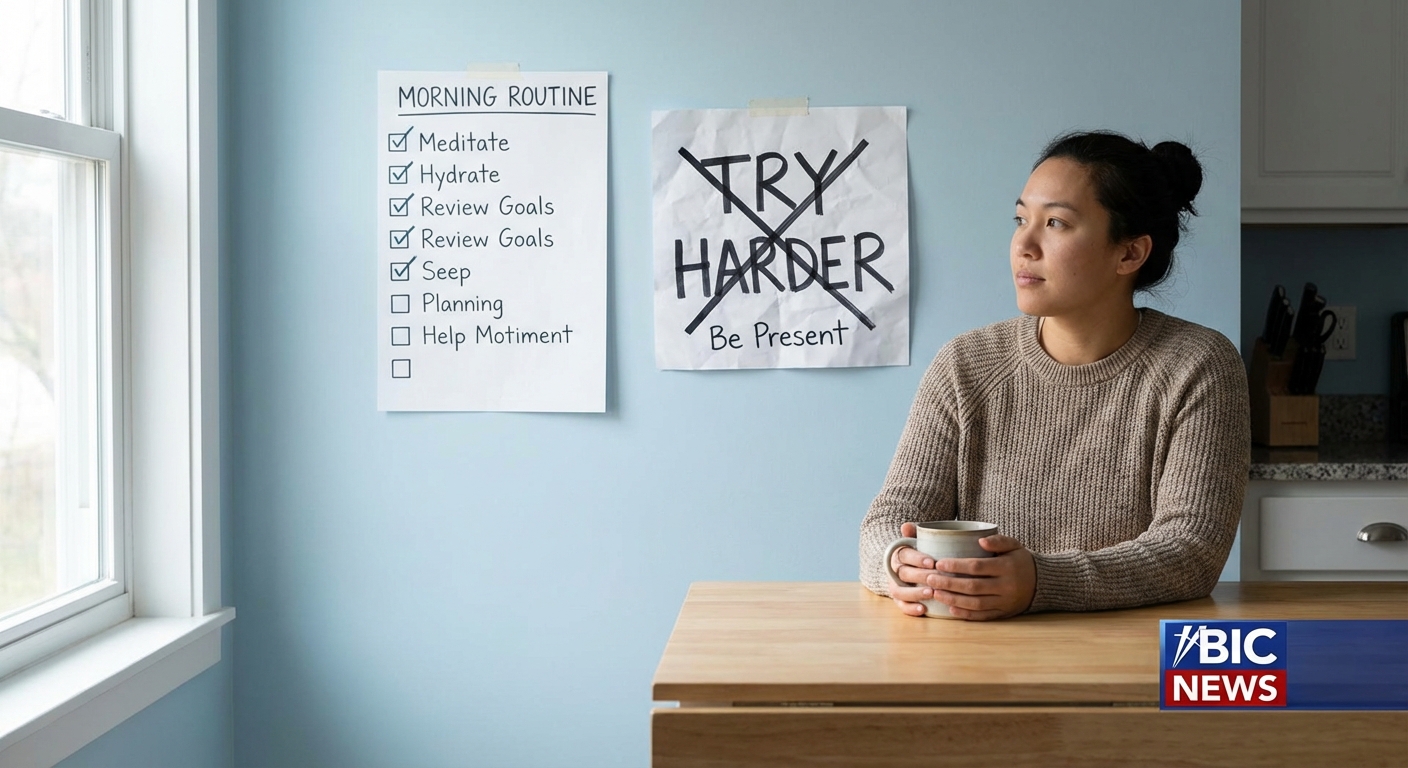
Most self-improvement advice assumes you’ll simply try harder: more grit, more discipline, more motivation. That works for a while—until it doesn’t.
Why Willpower Is Overrated
From a systems perspective, this is backwards. Behavior is largely a function of the structures you live inside: your environment, incentives, defaults, and constraints. Willpower is a short-term override, not a sustainable strategy.
If you’re serious about changing your life, you need to stop asking, “How do I become more disciplined?” and start asking, “What system would make the right behavior easier than the wrong one?”
First Principles: Behavior as an Output of Systems
At its core, behavior is an output of three interacting elements:
- Capability – Can you do the thing? (skills, knowledge, resources.)
- Prompt – What triggers the behavior? (cues, reminders, context.)
Path of Least Resistance – Among your options, which is easiest right now?
Willpower is what you use when the desired behavior is not the path of least resistance. A system, properly designed, changes that path.
We can formalize it:
Behavior ≈ f(environment, defaults, incentives, identity) + noise
You can fight this function, or you can shape it.
The Systems Approach: Four Levers That Beat Raw Effort
Designing systems means pulling concrete levers instead of hoping for a better mood. There are four main ones:
- Environment – Physical and digital surroundings.
- Defaults – What happens if you don’t decide.
- Friction – How easy or hard an action is.
- Feedback – How quickly you see consequences.
Let’s make each of these practical.
1. Environment: The Silent Shaper of Behavior
Your environment is always nudging you. Most of the time, it’s nudging you toward convenience, distraction, and consumption.
Instead of promising to “resist,” change the environment.
Examples:
- If your phone is on your desk, you will check it. Put it in another room during work.
- If junk food is in your house, you will eventually eat it. Don’t store what you don’t want to consume.
- If your laptop is full of notifications, your attention will be fragmented. Turn off non-essential alerts and uninstall apps you don’t truly need.
Design question:
“If a stranger lived in my current environment, what habits would it naturally produce?”
If you don’t like the answer, your system is misaligned.
2. Defaults: What Happens If You Don’t Decide?
Defaults are decisions made in advance that continue to operate silently.
- Default meals: You don’t decide what’s for lunch every day; you rotate between a few pre-chosen, decent options.
- Default savings: Money leaves your account automatically on payday.
- Default work schedule: Deep work happens at 9 a.m., not “whenever I feel like it.”
Willpower fights the moment. Defaults skip the moment.
Real Example: Savings Rate
Relying on willpower: “I’ll try to save what’s left at the end of the month.”
System approach: “On payday, 15% of income automatically moves to a separate account I don’t touch.”
Over time, the second person wins, regardless of who feels more motivated.
3. Friction: Add It Where You Want Less, Remove It Where You Want More
Humans follow the path of least resistance. So instead of moralizing your behavior, engineer the path.
Reduce friction for good behavior:
- Lay out workout clothes the night before.
- Keep your work tools open and ready at the start of the day.
- Create templates for recurring tasks (emails, reports, workouts).
Increase friction for bad behavior:
- Remove social media apps from your phone; use them only on a secondary device.
- Store tempting but unhelpful items out of immediate reach (or don’t buy them).
- Require a short waiting period and a written justification before large impulsive purchases.
The point isn’t to eliminate freedom. It’s to stop requiring heroism for every reasonable choice.
4. Feedback: Make Reality Unavoidable
Behavior decays when feedback is slow, weak, or invisible.
Most modern systems—health, finance, work—bury the feedback under complexity.
- You don’t feel the health effects of bad sleep immediately.
- You don’t feel the financial damage of poor spending for months.
- You don’t feel the career cost of distraction for years.
Good systems pull feedback closer.
Examples:
- Health: step count, sleep duration, weekly weigh-ins or body measurements.
- Finance: weekly spending review, net worth dashboard updated monthly.
- Work: visible progress trackers for key projects; shipping cadence.
The goal isn’t to obsess over metrics. It’s to see the trajectory you’re on before it’s too late to correct.
Putting It Together: A Simple Framework for Systemic Change
When you want to change a behavior, walk through this sequence instead of promising to “try harder.”
Define the Behavior Precisely
Not “eat better,” but “cook at home 5 nights a week.”
Map the Current System
Ask: “What environment, defaults, friction, and feedback currently produce my existing behavior?” Write it down.
Adjust One Lever at a Time
- Environmental: What can I remove/add in my space? - Defaults: What can I pre-schedule or automate? - Friction: What can I make easier/harder? - Feedback: What small metric keeps me honest?
Run a 2-Week Experiment
Commit to running the new system, not achieving a perfect outcome.
Review and Iterate
- Did behavior change? If yes, cement the change. - If not, adjust one more lever and repeat.
This is not glamorous. It is, however, repeatable.
Example: Reducing Mindless Phone Use
Vague intention: “I should use my phone less.”
Step 1: Define the behavior.
“Limit social media to 20 minutes per day, only between 6–7 p.m.”
Step 2: Map the current system.
- Environment: phone next to bed and on desk.
- Defaults: notifications on; apps on home screen.
- Friction: almost none; face ID opens everything instantly.
- Feedback: no immediate pain from scrolling; maybe a vague sense of regret later.
Step 3: Adjust levers.
- Environment: charge phone outside bedroom; not on work desk.
- Defaults: notifications off for non-essential apps.
- Friction: remove social apps from phone; access them only on computer in the evening, or use app limits with a strong passcode.
- Feedback: track screen time daily; simple yes/no log: “Did I stick to the 20-minute window today?”
Run this system for 14 days. If it still fails, you’re not weak—you just haven’t made the system strong enough yet.
Example: Consistent Exercise Without Drama
Ambition: “I need to work out more consistently.”
Step 1: Define the behavior.
“Do 3 strength sessions of 45 minutes per week, plus 30 minutes of walking on non-lifting days.”
Step 2: Map current system.
- Environment: no ready space or gear; workouts require a trip to the gym.
- Defaults: evenings used for errands and screens.
- Friction: high—changing, traveling, deciding what to do.
- Feedback: vague; occasional mirror check.
Step 3: Adjust levers.
- Environment: set up a minimal home workout corner or choose a gym very close to home or work.
- Defaults: schedule recurring workouts in calendar, tied to existing routines (e.g., right after work).
- Friction: pre-pack gym bag; pre-select a simple program so you never decide “what to do” at the gym.
- Feedback: log workouts in a visible place; quick monthly photo or measurement check.
The system won’t be perfect, but it will demand less sheer willpower than starting from zero each time.
Respecting Yourself Means Respecting Systems
Blaming yourself for behavior that emerges predictably from your environment and structures is unproductive.
You are not exempt from the basic mechanics of human behavior. Neither am I. The way out isn’t shame. It’s design.
Treat yourself like someone whose time and energy are worth protecting. Build systems that support the life you say you want, not the one that algorithms and defaults hand you.
Willpower has its place—for emergencies, for rare pushes, for values-based decisions. But if you’re using it daily just to do the basics, your systems are failing you.
You can fix that. Systematically.