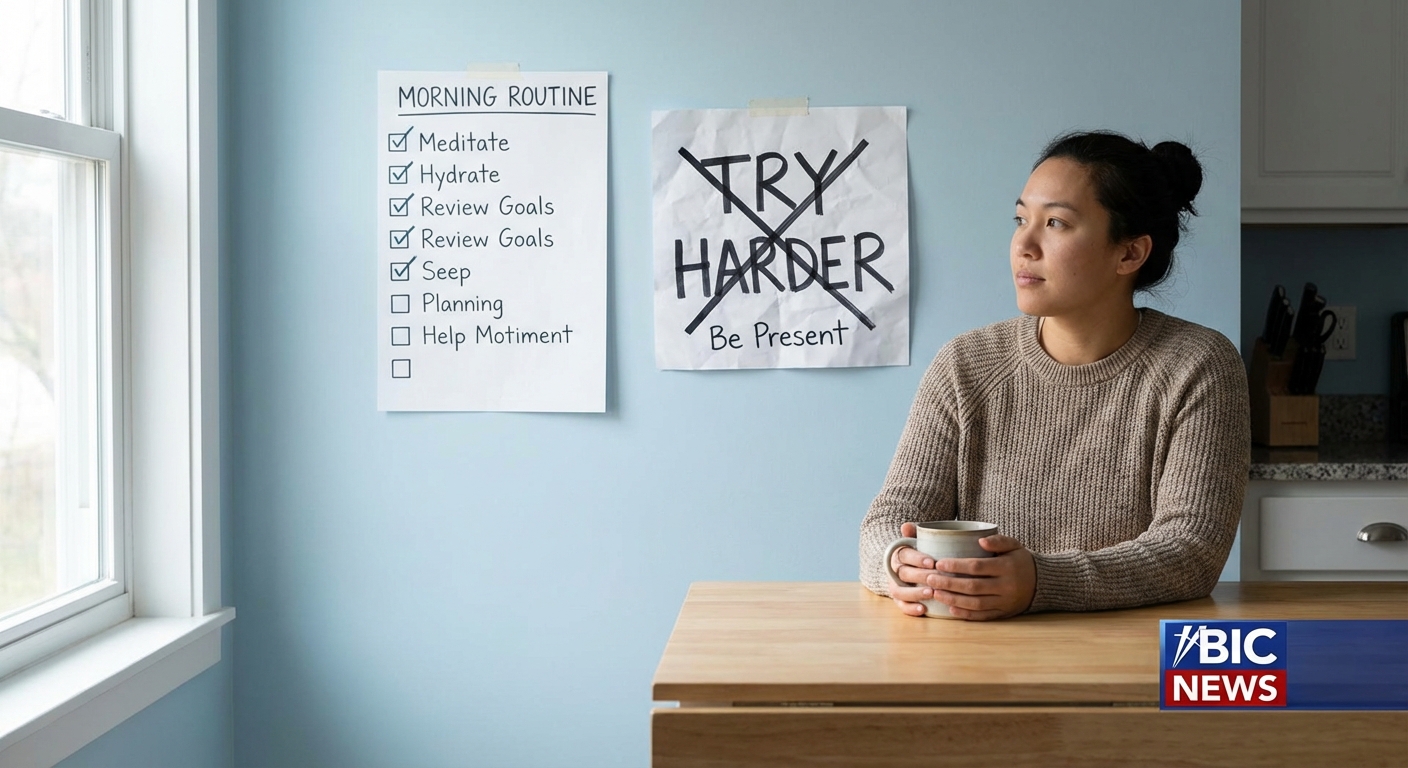
Intense, high-quality focus is treated like a rare mood: if you’re lucky, you “feel productive” and get a lot done. That’s a fragile way to live if your work actually matters.
Deep Work Is Not a Mood, It’s a System
Deep work should not depend on how you feel. It should depend on the system you run.
Let’s approach deep work from first principles: what conditions make sustained focus likely, and how do we engineer those conditions systematically instead of hoping for them?
First Principles of Deep Work
Sustained concentration requires three base conditions:
- Clear object – You know exactly what you’re trying to do.
- Protected channel – Minimal interruptions, noise, and context switching.
- Prepared mind – Enough cognitive capacity and energy.
If any of these three are missing, “trying harder” doesn’t help much. A deep work system is about making these conditions non-negotiable.
A Practical Deep Work System: The 4-Layer Model
You can think of a deep work system as four layers stacked on top of each other:
- Environment – Where and when you work.
- Protocol – How a deep work session runs from start to finish.
- Pipeline – What you work on next, without thinking.
- Recovery – How you refuel and prevent burnout.
Design each layer consciously.
1. Environment: Remove Friction, Remove Noise
Your environment should make deep work the default, not the exception.
Decide: Where does deep work happen?
- A desk, a specific room, a library, a particular coffee shop corner.
- Not “wherever with my laptop.” Specificity matters because it creates a cognitive association: this place = focus.
Decide: When does deep work happen?
- Block 60–120 minutes at the same time each workday.
- Protect it as if it were a meeting with someone you respect.
Remove obvious distractions:
- Phone in another room or in airplane mode.
- Browser with only necessary tabs open.
- Close chat apps entirely.
If this sounds basic, ask whether you’re actually doing it every day. Most people aren’t. Systems fail where we think we’re “above” the basics.
2. Protocol: How to Run a Deep Work Session
A session should have a clear start, middle, and end. Here’s a simple protocol:
Step 1: Define the Target (3 minutes)
Answer in writing:
- What will I have completed in 60–120 minutes that is objectively visible? (e.g., “Draft section 2 of the report,” not “work on the report.”)
Step 2: Plan the Path (2–5 minutes)
Write a mini-plan:
- Read yesterday’s notes.
- Outline the next section.
- Draft without editing.
- Quick clean-up.
You’re not scripting every minute; you’re reducing ambiguity.
Step 3: Timebox the Session
- Use a timer: 25–50 minutes on, 5–10 minutes off (classic Pomodoro-style), or one 90-minute block if you’re experienced.
- Mid-session breaks are for standing, water, or a quick stretch. Not apps.
Step 4: Close the Loop (5–10 minutes)
At the end of the session:
- Write 2–3 bullet notes: what you did, what’s next.
- Decide: what is the very first action for the next session?
This drastically decreases the friction of starting next time.
3. Pipeline: Never Ask “What Should I Work On?” During a Session
Deep work fails when a session starts with vague intentions. You burn 20 minutes just deciding what to do.
You need a work pipeline: a prioritized list of deep work tasks, defined clearly enough to start immediately.
Structure your pipeline by projects:
For each important project:
- Maintain a simple list of deep work tasks: analysis, writing, design, coding, etc.
- Each task should be concrete and 60–120 minutes in scope.
Example for a product launch:
- Draft email sequence outline.
- Write emails 1–3.
- Draft landing page structure.
- Write hero section copy.
- Analyze beta test feedback.
System rule:
- Pipeline is edited outside deep work time (during weekly review).
- During deep work, you only pick from pre-defined tasks.
This separation keeps focus high and prevents meta-work from invading your best hours.
4. Recovery: Fuel for the Cognitive Engine
Deep work is metabolically expensive. If your life is a blur of late nights, constant stimulation, and no downtime, your system is under-fueled.
You don’t need a perfect lifestyle. You need a baseline that makes deep work possible.
Minimum Viable Recovery System:
- Sleep: Aim for a consistent sleep window, even if not perfect duration. Same time to bed and wake up most days.
- Movement: 20–30 minutes of walking or light exercise on workdays.
- Mental off-switch: At least 60 minutes in the evening without screens or work talk.
You won’t maintain depth for years if you treat your body like a peripheral.
Calibration: How Much Deep Work Do You Actually Need?
Not all work is deep work. Email still exists. Admin still exists. The question is: what proportion of your week must be deep to make real progress?
Use this rough framework:
- If your work is mostly operational: 1–2 hours/day deep work is significant.
- If your work is creative, analytical, or strategic: 3–4 hours/day is a strong target.
Deep work should be:
- Scheduled (on your calendar).
- Tracked (you know how many deep hours you did this week).
Otherwise, you’re guessing.
Example: A Simple Deep Work System in Practice
Imagine you’re a software engineer with a noisy environment and constant Slack messages.
Design:
- Environment:
- Deep work 9:00–11:00 a.m., headphones on, Slack status: “Heads down, back at 11.”
- Protocol:
- 8:55: open task manager, pick one well-defined feature or bug.
- 9:00–9:05: write the target and sub-steps.
- 9:05–10:25: two 40-minute focus blocks with 5-minute breaks.
- 10:25–10:35: write notes and next steps.
- Pipeline:
- Weekly, with your manager, maintain a list of 90-minute-sized tasks.
- Recovery:
- No late meetings after 7 p.m.; short walk after lunch.
This is not dramatic. It is predictable. That’s the point.
Common Breakpoints (and How to Fix Them)
- You keep breaking your own time blocks.
Then they’re not real. Treat them like a client meeting. If something else displaces them, you must reschedule within the week.
- You sit down and still drift to distractions.
Tighten the protocol. Make a specific “start ritual”: water, timer, written target, notifications off. No ritual, no session.
- You feel cooked after 30 minutes.
That’s fine. Start with 25-minute blocks. Capacity for deep work is trainable.
- Your team expects instant replies.
Negotiate one or two protected hours. Show them your output improves. Most sane colleagues will accept, especially if they know when you’re reachable.
From Heroic Sprints to Reliable Throughput
Relying on rare heroic bursts of inspiration is not a professional strategy. It’s gambling.
A deep work system turns focus into something boringly reliable: you sit down, you run the protocol, you ship meaningful work. Not every day will feel amazing, but the cumulative output will be impossible to ignore.
You don’t need to be a monk. You need a few non-negotiable structures that support depth. From there, the work compounds. And that, over years, is the real difference between people who build serious bodies of work and those who only talk about doing so.