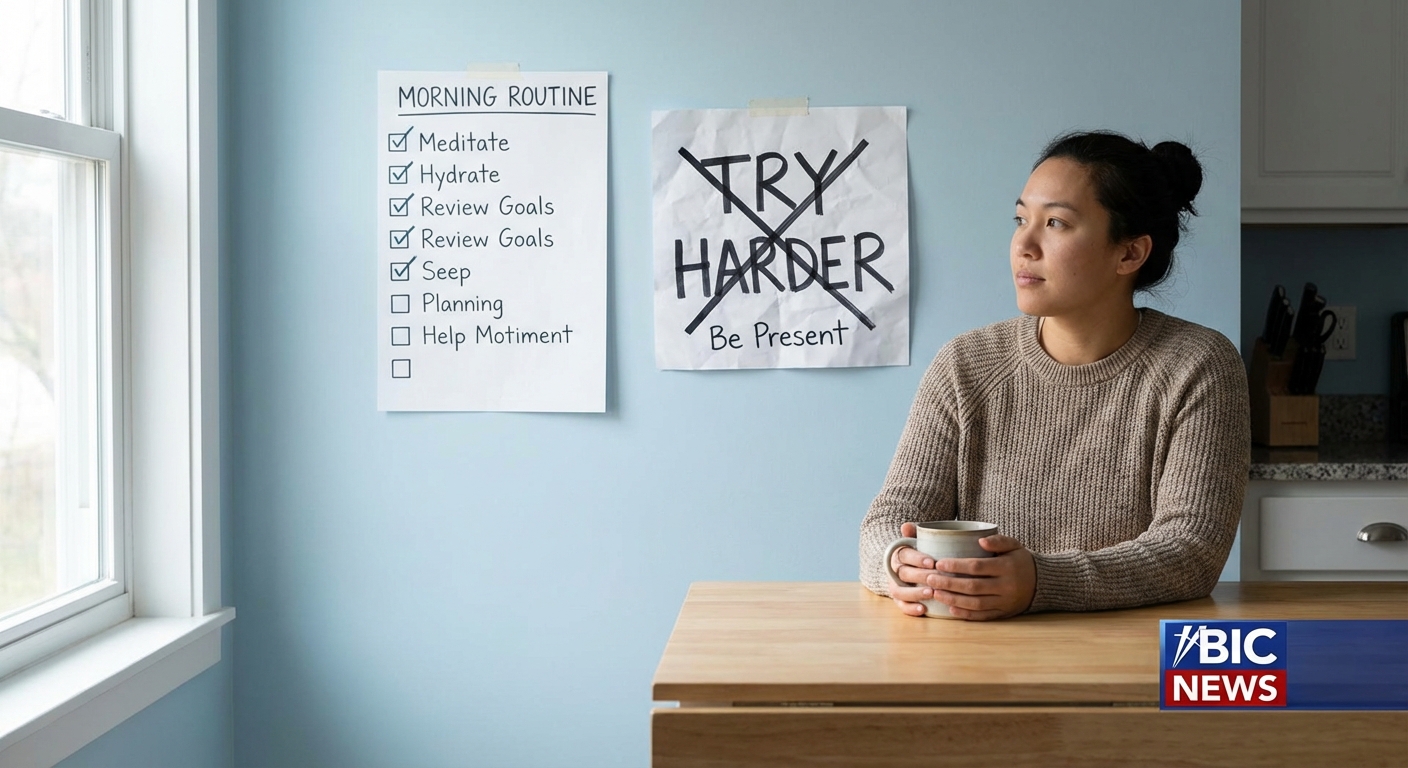
Most people organize their lives around goals: lose 10 pounds, hit $X in revenue, write a book. Goals feel concrete, measurable, and motivating. But they have a structural weakness: they are events, not engines.
Why Systems Beat Goals Over the Long Term
A system is an engine—a repeatable process that continues to produce outcomes. When you think in systems, you stop asking, “How do I hit this target?” and start asking, “What predictable process, once built, makes this target almost inevitable?”
From a first-principles perspective, outcomes are emergent properties of systems. If you don’t like your outcomes, the rational move is not to want harder, but to redesign the underlying system.
This article is about that redesign.
First Principles: What Is a System, Really?
Stripped down, a system has four core components:
- Inputs – What you feed into the process (time, energy, money, attention).
- Process – The repeatable sequence of actions that transform inputs.
- Constraints – The limits, rules, bottlenecks, and tradeoffs that shape the process.
- Outputs – The results the process produces, reliably or not.
A useful mental shift:
You don’t have results, you run systems that produce them.
From this, a few implications follow:
- If you can’t describe the process, you don’t have a system; you have wishes.
- If you can’t name the constraints, you’re blind to where leverage actually lives.
- If the outputs are inconsistent, the process is either unstable or not actually followed.
The Systems Formula: A Simple Framework
Use this framework to turn vague goals into concrete systems:
Clarify the Output
Define what “good” looks like in objective terms. Example: “Publish one high-quality article weekly for 6 months.”
Map the Input-Process-Output Chain
For each desired output, ask: - Inputs: “What resources do I need, and at what cadence?” - Process: “What steps transform inputs into the output?” - Output: “What exactly is produced, and how do I measure it?”
Name the Constraints and Bottlenecks
- Internal: skills, discipline, energy, attention. - External: time, capital, dependencies, market.
Codify the Loop
Turn the process into something that can run: - Checklists - Calendared blocks - Standard operating procedures (SOPs)
Instrument the System
Decide on 1–3 metrics: - Input metric (e.g., “hours of deep work per day”). - Process metric (e.g., “drafts edited per week”). - Output metric (e.g., “articles shipped per month”).
Iterate Intelligently
Don’t change everything at once. Adjust one variable, observe for a cycle, keep or revert.
Example 1: Fitness as a System, Not a Resolution
Goal-thinking: “I want to lose 10 pounds.”
System-thinking: “I want a system that keeps my body fat within a healthy range with minimal willpower.”
Output: maintain 15–18% body fat for the next 5 years.
Inputs:
- 5 hours/week for training.
- Basic cooking ability and grocery budget.
- Strength training 3x/week using a predefined program.
- Daily walking: 8,000–10,000 steps.
- Default meals with known calories and macros.
- Busy work schedule.
- Limited decision-making energy.
- Same workout days and times every week; non-negotiable appointments.
- A short list of “default meals” that remove daily food decisions.
- A weekly prep block on Sundays.
- Input: workouts completed/week.
- Process: step count/day.
- Output: monthly body measurements or DEXA scans quarterly.
Process:
Constraints:
System Design:
Metrics:
Notice how the 10-pound goal becomes almost incidental if this system runs for a year.
Example 2: Writing as a Production System
Goal-thinking: “I want to write a book.”
System-thinking: “I want a writing system that reliably produces 1,000 quality words per weekday.”
Output: 1,000 publication-ready words per workday.
Inputs:
- 90 minutes of protected writing time.
- A list of pre-selected topics.
Process:
- 5 minutes: review yesterday’s work and outline next section.
- 60 minutes: distraction-free drafting.
- 25 minutes: edit and clean up.
Constraints:
- Mental energy lower after 3 p.m.
- Daily writing block 7:30–9:00 a.m.
- Use a writing template (hook, claim, support, example, close).
- Maintain a backlog of 20+ ideas in a single document.
- Input: days the writing block is started on time.
- Process: minutes of focused writing (tracked by timer).
- Output: weekly word count and number of pieces shipped.
System Design:
Metrics:
Now you’re not “hoping to write more.” You’re operating a content production system.
How to Audit Your Current Life Systems
Pick one domain: health, money, relationships, or career. Then ask:
What are my current outputs?
Be brutally specific: savings rate, body fat, time with loved ones, quality of work.
What system is producing these?
Describe, in writing, your current default behaviors. For example: - “I check my phone first thing in the morning.” - “I respond to email all day instead of scheduling blocks.”
Where is the bottleneck?
- Is it knowledge (don’t know what to do)? - Execution (know, but don’t do consistently)? - Environment (system conflicts with reality)?
What is the smallest system I can design that would improve this?
Don’t design a perfect system. Design a minimum viable system (MVS): something you can run tomorrow with near-zero friction.
Principles for Building Systems That Survive Real Life
Bias for Simplicity
Complex systems fail in complex environments. Fewer moving parts means less that can break.
Design for Defaults, Not Discipline
Systems work when the easiest option is the right one. Don’t rely on willpower.
Respect Constraints Instead of Fantasizing Around Them
You don’t magically gain three more hours a day. Design within your actual limits.
Tie Systems to Identity
“I’m the kind of person who…” is stronger than “I want to…”. Systems that match identity are easier to keep.
Build Feedback Loops
What gets measured shapes what gets managed. But measure very little—only what changes behavior.
From Outcome Addiction to System Mastery
Chasing goals keeps you in a cycle of temporary effort and temporary results. Designing systems moves you toward permanent capabilities—processes that run whether or not you feel motivated.
You already live inside systems. Your current results prove it. The question is whether those systems were designed consciously or accumulated by accident.
If you’re serious about building a meaningful life, treat each important area—health, money, work, relationships—as a system to be designed, instrumented, and iterated.
Goals are fine as a compass. But the real work—and the real leverage—is in the systems you build and run every day.