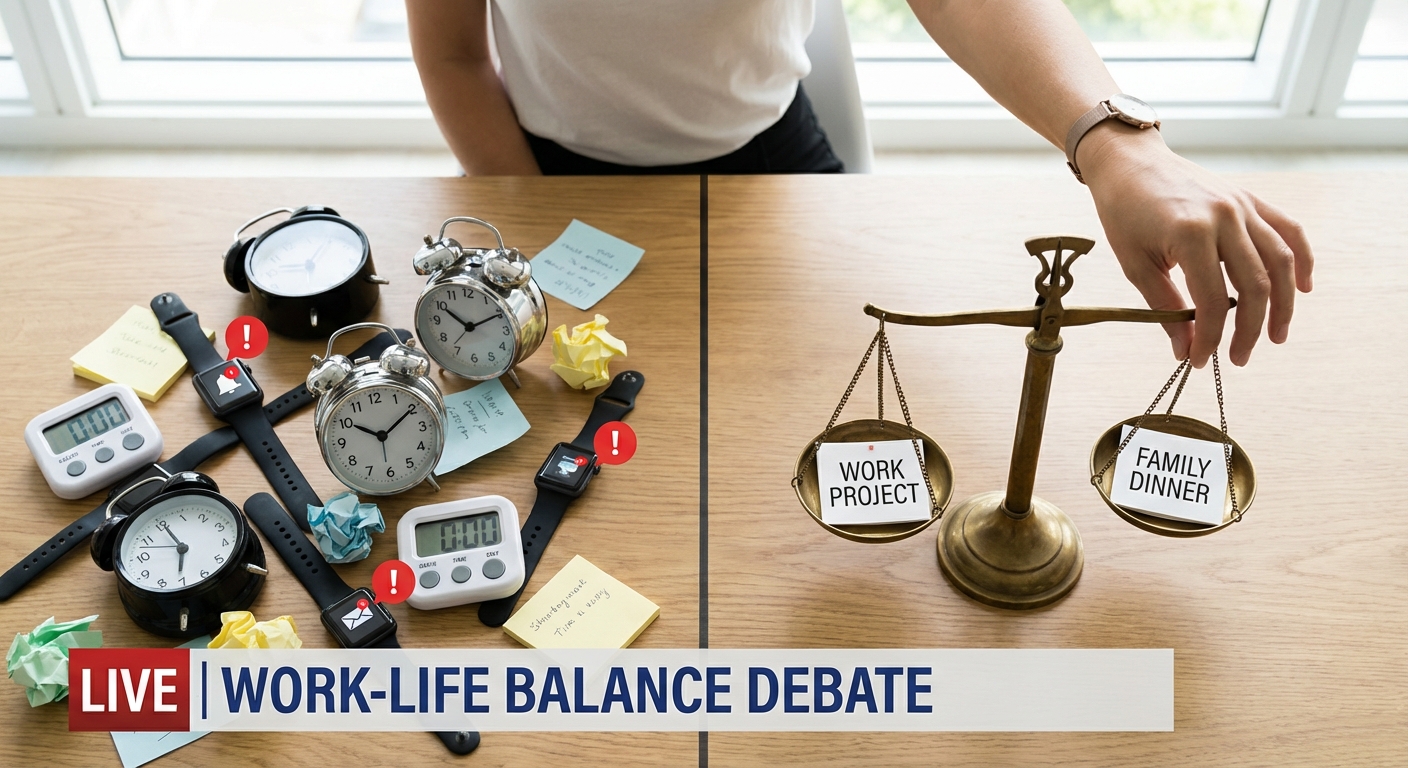
If you’re introverted and ambitious, you face a specific problem: your goals require visibility, collaboration, and consistent output—while your energy is easily drained by interaction and context switching.
Ambition Without Energy Management Is Self-Sabotage
Conventional time advice tells you to “network more,” “speak up more,” “say yes to opportunities.” For many introverts, that advice leads to burnout, not progress.
You don’t just manage time; you manage exposure. The variable that matters is not hours worked but hours worked at full cognitive and emotional strength.
Let’s build a calm, practical approach from first principles.
First Principles: Time, Energy, and Stimulation
Three realities define time management for introverts:
- Your best work happens in solitude.
Deep thinking, writing, designing, coding, planning—these thrive in uninterrupted time.
- Social interaction is costly, even when positive.
Meetings, calls, group work, and small talk drain your cognitive budget.
- Recovery windows are non-negotiable infrastructure.
Without deliberate recharge time, you’ll still "show up" physically but with hollowed-out mental presence.
Given this, trying to match an extrovert’s calendar style is irrational.
Instead, design your time around energy peaks, social load, and recovery blocks.
Step 1: Map Your Introvert Energy Curve
Before changing your schedule, understand your natural rhythm.
Over a week, track:
- When you feel mentally sharp (time of day)
- When you feel socially depleted
- What kinds of interactions drain vs. energize you
Use a simple log:
- Morning / Afternoon / Evening rating (1–5)
- Notes like "back-to-back meetings, brain fog by 2 p.m." or "2 hours alone = huge clarity boost"
Most introverts discover:
- 2–5 hours/day of high-quality deep work is realistic
- More than 3–4 substantial interactions/day degrades thinking
- Recovery after heavy social days is not optional
You’re not weak; you have a specific operating system. Respect it.
Step 2: Separate Deep Work Days From Meeting Days (When Possible)
Context switching is particularly expensive for introverts. Solution: time zoning.
Instead of spreading everything evenly, cluster similar types of work:
- Maker/heavy-focus zones:
Long blocks (2–4 hours) with no meetings, no chat, phone in another room.
- Manager/collaboration zones:
Meetings, check-ins, feedback sessions, calls, necessary social tasks.
If you can’t dedicate full days, use half-days:
- Mornings for deep work, afternoons for interaction
- Or two mostly-deep-work days and three more collaborative days
Even slight clustering reduces energy leakage.
Step 3: Create an "Energy Budget" for Social Load
Treat social interaction like a limited resource.
Set weekly caps:
- Maximum number of meetings per day (e.g., 3)
- Maximum consecutive hours of interaction (e.g., 2–3 before a break)
- Maximum number of "high-intensity" events per week (e.g., 1 talk, 1 big networking event)
Then schedule buffer zones:
- 15–20 minute decompression blocks after demanding interactions
- At least one low-interaction evening after a heavy day
Communicate constraints where needed:
- "I’m available for meetings in the afternoons; mornings are reserved for heads-down work."
- "Let’s make this a 25-minute call instead of an hour."
You’re not being difficult; you’re preserving the quality of your contribution.
Step 4: Design Default Protection for Your Best Hours
Once you know when you do your best thinking, guard that time.
Implement:
- Standing deep work blocks.
Same time every weekday—e.g., 9–11 a.m.—reserved for solitary high-value work.
- Hard calendar rules.
- No recurring meetings in your prime focus window
- No random social commitments that invade that slot
- Battle plan for interruptions.
- Turn off notifications during deep work
- Use "Do Not Disturb" status with a clear note: "Deep work—back at 11 a.m."
If others constantly invade those blocks, you don’t have a time issue; you have a boundary and communication issue.
Step 5: Use Asynchronous Communication as a Force Multiplier
Introverts often communicate better in writing than in spontaneous conversation. Use that.
Wherever possible, shift from synchronous to asynchronous:
- Replace status meetings with written updates
- Answer complex questions via well-structured emails or docs
- Use shared documents for collaboration instead of constant calls
Benefits:
- More time to think clearly
- Less social energy burn
- Written artifacts that scale beyond one conversation
This is not hiding; it’s choosing the medium where you deliver the most value.
Step 6: Pre-Plan Social Exposure for Ambitious Goals
Ambition still requires visibility. You cannot avoid people entirely and expect outsized outcomes.
Instead of sporadic, guilt-ridden networking, schedule focused exposure:
- One high-quality networking conversation per week
- One presentation, brown bag, or visible contribution per month
- One in-person event per quarter that actually matters for your goals
Prepare deeply, recover deliberately.
For each significant social event:
- Plan 30–60 minutes of solitude afterward
- Avoid stacking multiple high-intensity events back-to-back
This allows you to be fully present when it counts, not permanently half-present.
Step 7: Build a Low-Drama "No" System
Introverts often say yes to avoid conflict, then pay later in energy debt.
Create 2–3 default responses you can use without overthinking. For example:
- "This week is fully committed. I can do a 20-minute call next Thursday or the following Monday."
- "I’m heads-down on a deadline this month, so I can’t take on anything new until after the 20th."
- "That’s not something I can do well right now, but here’s someone who might be a good fit."
You’re not obligated to justify every boundary with personal details. Polite firmness is enough.
Step 8: Plan Real Recovery, Not Just Numbing
Introverts sometimes confuse numbing (scrolling, background TV) with recovery. Numbing delays exhaustion; it doesn’t resolve it.
Define what actually restores you:
- Walks alone
- Reading
- Solo hobbies (music, drawing, building something)
- Unstructured thinking time
Schedule these like you would meetings.
Example:
- 30 minutes solo walk after work
- 1–2 hours on weekends for a personally meaningful hobby
- Quiet mornings on at least one weekend day
Without active recovery, your best hours will erode.
Example: An Ambitious Introvert’s Week (Condensed)
Let’s say you’re a mid-level professional aiming for a senior role.
You might design:
- Mon/Wed/Thu mornings (8:30–11 a.m.): Deep work on important projects
- Tue/Fri afternoons: Meetings, collaboration, 1:1s
- Wed lunch: Networking call or mentoring conversation
- Thu 4–5 p.m.: Weekly review and planning
- Most evenings: Low-social, high-rest activities
- One evening biweekly: Professional event or speaking opportunity
You still show up, lead, and advance—but with a structure that doesn’t quietly destroy your internal resources.
You’re Not Broken, You’re Specialized
If you’re introverted and ambitious, your advantage is depth: of thought, of work, of relationships.
Time management for you is not about mimicking extroverted calendars. It’s about:
- Protecting deep work windows
- Budgeting social energy deliberately
- Building visible impact without constant exposure
You’re not fragile. You’re running a high-performance engine that overheats easily. The point is not to idle—it’s to build a schedule where you can operate at full power without burning out.