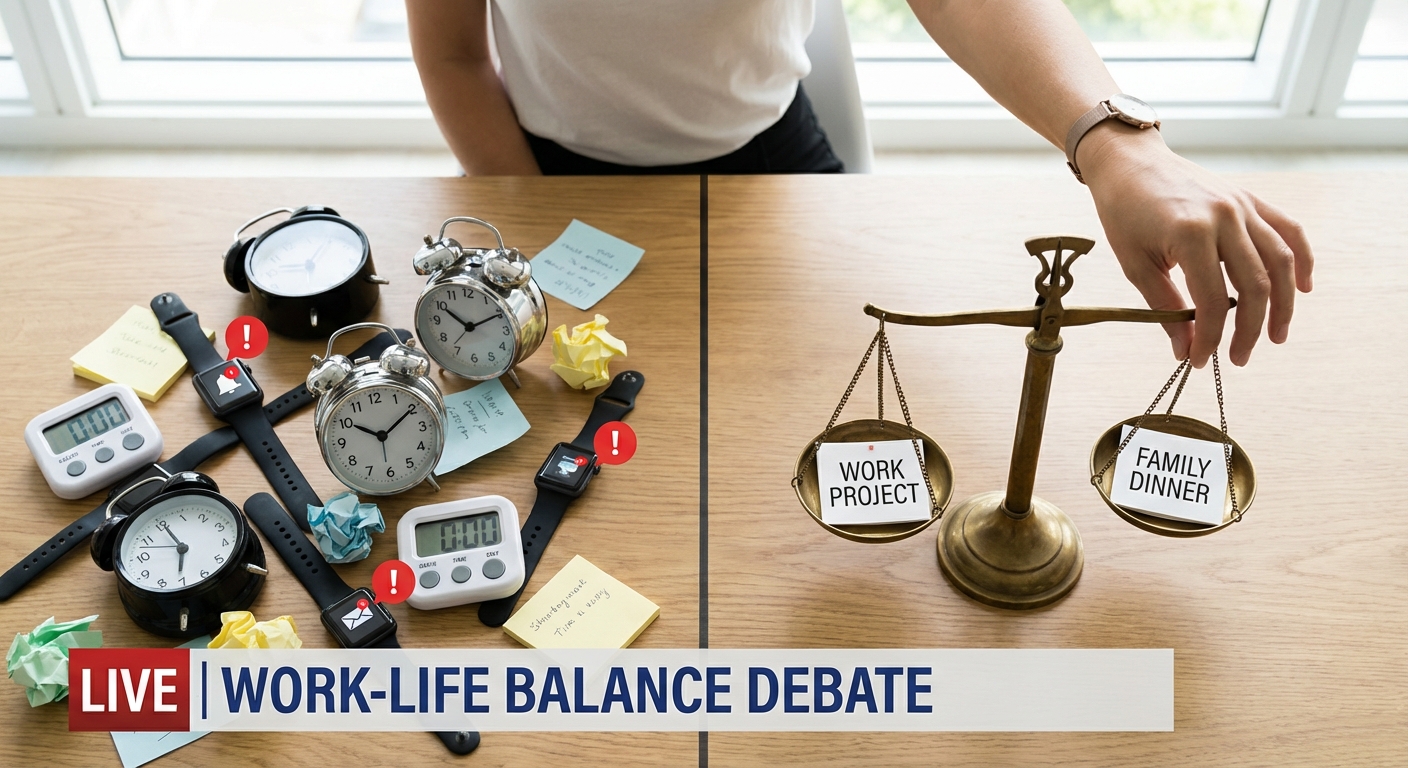
Most time advice assumes infinite flexibility: just wake up earlier, say no more, batch tasks. Real adults have constraints—kids, bosses, aging parents, limited energy.
You Don’t Need Hacks, You Need Architecture
Treating your life like a blank slate is dishonest. You need a time architecture that respects constraints yet still creates focus.
This article lays out a 4-tier framework that works under pressure. No platitudes, just structure.
First Principles: Time as Infrastructure
Think of time like city infrastructure:
- Some roads must always exist (sleep, core job work)
- Some roads determine long-term prosperity (education, maintenance)
- Some roads are nice-to-have but not essential
If you don’t intentionally design this infrastructure, it grows chaotically: side streets everywhere, no main routes, constant traffic.
The 4-tier architecture is a way to deliberately build the “roads” of your week.
The 4 Tiers of Time
Tier 1: Life Support
Tier 2: Strategic Work
Tier 3: Operational Work
Tier 4: Residual & Noise
This is not a theoretical model. It’s how your time is actually being spent, whether you see it or not.
Tier 1: Life Support (Non‑Optional Foundation)
This includes:
- Sleep
- Basic health (meals, hygiene, essential medical care)
- Core caregiving
- Minimal financial maintenance (paying bills, taxes)
Without Tier 1, everything else eventually collapses.
Design Principles:
- Non‑negotiable: You don’t “squeeze” sleep or health as a default tactic.
- Protected windows: Fixed bed/wake times, recurring health appointments.
- Batching admin: One weekly money/admin block instead of constant micro-tasks.
If you consistently borrow from Tier 1 to feed other tiers, you’re building on sand.
Tier 2: Strategic Work (Trajectory Drivers)
This is the time that changes your future:
- Deep project work
- Skill development
- Networking and relationships that matter
- Business building, long-term planning
Tier 2 is always under attack because it rarely screams for attention. Email screams. Deep work doesn’t.
Design Principles:
- Calendar-first: Tier 2 is scheduled before everything else each week.
- Energy matching: Place it where your brain works best (for many, mornings).
- Zero multitasking: Devices away, one clear output per block.
Think 10–25% of your waking hours as a target, depending on your season of life.
Tier 3: Operational Work (Maintenance & Obligations)
This is the work that keeps things running:
- Routine job tasks
- Repeatable execution work
- Regular meetings
- Household chores, logistics
Most people live almost entirely in Tier 3.
Design Principles:
- Timeboxing: Give tasks a container instead of letting them sprawl.
- Standardization: Default processes for repeated work (checklists, templates).
- Aggressive batching: Group similar tasks to reduce context switching.
Tier 4: Residual & Noise (Default Behavior)
This is everything that just happens:
- Mindless scrolling
- TV as background habit
- Unnecessary browsing
- Low-value conversations, gossip, reactive email checking
Some Tier 4 time is fine. Brainless decompression has its place. The problem is when it becomes the default destination of your leftover attention.
Design Principles:
- Caps, not bans: E.g., 60 minutes/day max of low-intent screen time.
- Environment design: Harder access to your main distractions.
- Swap rule: If you’re tired, choose a pre-approved low-energy activity instead of drifting.
Step 1: Map Your Current Architecture (Reality Check)
Before optimization, you need honesty.
For 3–5 days, track your time in 30–60 minute chunks. Nothing fancy—a simple note app or piece of paper.
Label each chunk as:
- L = Life Support (Tier 1)
- S = Strategic Work (Tier 2)
- O = Operational Work (Tier 3)
- N = Noise (Tier 4)
At the end, total the hours per category.
You might discover:
- Tier 2 is almost nonexistent
- Tier 4 is bigger than you’d like to admit
- Tier 3 has quietly expanded to absorb everything
This is your current architecture. Don’t judge it; use it.
Step 2: Design a Plausible Target Mix
Given your life stage and obligations, set a realistic target ratio.
Example for a demanding full-time job with kids:
- Tier 1 (Life Support): 45–50% of waking hours
- Tier 2 (Strategic): 10–15%
- Tier 3 (Operational): 25–35%
- Tier 4 (Noise): 5–15%
Example for a single person building a business:
- Tier 1: 35–40%
- Tier 2: 20–30%
- Tier 3: 25–35%
- Tier 4: 5–10%
The point isn’t perfection. It’s having an intentional architecture instead of a default one.
Step 3: Calendar Design From the Top Down
Build your week in this order:
Tier 1: Sleep schedule, meals, exercise, caregiving blocks
Tier 2: Strategic blocks (2–3 per week minimum, 60–120 minutes each)
Tier 3: Meetings, routine work, chores, errands
Tier 4: Explicit caps and windows for low-intent leisure
Example:
- M/W/F 7–8:30 a.m.: Deep work (Tier 2)
- Tue/Thu 6–7 p.m.: Skill building
- Sat morning: Errands + house reset (Tier 3)
- 9:30–10:30 p.m. max: Mindless screen time (Tier 4 cap)
This isn’t rigid; it’s scaffolding. You’ll adjust, but the tiers stay.
Step 4: Protecting Tier 2 Against Reality
Strategic time is fragile. It will be the first thing sacrificed when life gets chaotic.
You need explicit protection rules:
- No same-day cancellations by default.
You can move a strategic block, but you must reschedule it within the same week.
- Escalation criteria.
You only sacrifice Tier 2 time for genuine Tier 1 emergencies, not Tier 3 annoyances.
- Defensive communication.
- "I’m booked during that time, but I’m available at X or Y."
- "I can attend the first 20 minutes of this meeting, not the full hour."
Strategic time is work. Treat it that way when you talk about it.
Step 5: Weekly Architectural Review
Each week, instead of asking, "Did I finish my to-do list?", ask:
Did my time match my intended tier ratios?
Where did Tier 4 exceed its cap? Why?
Where did Tier 2 get compromised? By what?
What one boundary or system can I add next week to protect the architecture?
Example adjustments:
- Move deep work earlier to avoid unexpected meetings
- Pre-plan evening activities to prevent default scrolling
- Batch email at 11 a.m. and 4 p.m. instead of all day
Incremental architectural improvements beat dramatic one-time overhauls.
A System That Respects Your Reality
Good time management doesn’t pretend you’re an optimization robot.
The 4-tier architecture accepts:
- You have constraints
- You have limited energy
- You will sometimes choose easy over optimal
But it also assumes you’re serious about a meaningful life—and are willing to design your time accordingly.
Don’t chase productivity stunts. Build an architecture that makes your default week closer to the life you actually want.